Friday, November 18, 2011

What Does It Mean to Love Somebody I Have Not Seen?

By John Mark Reynolds
Scriptorium Daily

At some point a Christian says he loves Jesus. I think that is an infallible test of anyone who might be a Christian. Not everybody who says they love the Savior is a Christian, but nobody who doesn’t is.

What does it mean to say I love somebody I have not seen?

It does not mean I love a mere idea. The ideas of Jesus are interesting, but not as intriguing to my intellect, I confess with some shame, as those of Plato. If my goal were to solve mental puzzles, then I would ask for a day with Socrates, not the Jesus of the Gospels.

Loving Jesus is not loving being in love. As a romantic the passion for passion is a problem for me, so I know the difference. Jesus insists on being treated like a person. When I sin, He insists I repent. He has mercy on me, but demands I admit I am a sinner. At times, I wish I were simply a “thing” Christ valued, but He loves me. When I wish to be treated like a commodity, He treats me like a person accountable for what I do.

Jesus is a person. He has opinions, ideas, and feelings. As God and as man, He has opinions only a fool would ignore and that are not so abstract that they are beyond impacting my daily life. If Jesus were just God, I might plead ignorance of His will, become lost in the real inability of any man to know the Divine Nature. Instead God insisted on becoming flesh and living as a man, so He can relate easily to me.

In some ways, it is like loving Hope. My wife, my bed partner as modern commercials call her, keeps insisting I treat her as a changing, living being that cannot be reduced to a check-list of “things I know about my wife.” Strictly speaking, she is not mine at all, but God’s own.

I can no more own Hope than a slaver could own Frederick Douglass.

And really who would want to try owning the woman she is?

Jesus insists that I treat Him as the person He is. In His case, that is a very big deal. Hope does not deserve capitalizing every personal pronoun. My darling is not She, but He is He.

My secular friends think, of course, that I am talking to myself. When I say I love Jesus, I love some mental construct that I have pulled together from reading the Gospels and my life experiences.

Maybe, but it does not feel that way. As a child I had imaginary friends, but Jesus is not like they were. He does not go along with my attitudes or prejudices, but in fact frequently challenges them. Just when I think I have Him figured out, He insists on overturning my neat image of Him.

In that way Jesus is more like my experiences with Hope, than my childhood experiences with race of imaginary beings called the Hongese. I could put the Hongese away, but Jesus keeps on appearing in my thought life at odd times.

As I get older, I begin to understand the answer to the most obvious question I am usually asked at this point. Why does Jesus hide His physical presence from me? I think it for the same reason that it is good for me to be far from Hope. When I am with Hope her beauty and my passion for her can overwhelm knowing her. I am tempted merely to adore and not to love her with my heart, mind, and body.

Jesus is more beautiful than Hope. If I saw Him, I could only worship, even if I did not love Him. Evidently, no being, not even Satan, can see Him as He is and not say: “Jesus Christ is Lord.” If I am to have a relationship with Him, He must hide as He did when He was on Earth.

I could be kidding myself, but I cannot believe it. My sense of Jesus has become greater than my sense of the world around me at times. It is easier for me to believe that my eyes are kidding me, than that His quiet, lovely, insistent voice is unreal. Years of listening, or trying to listen, have given me that blessing.

If it is an illusion, it is one I would have jarred, but which is not shaken by the real world. Instead, I hear His voice even at painful times or in hard turns my life takes.

I love Jesus. This Jesus is perfectly revealed in the Gospels and this has kept me from kidding myself or being deluded by false voices before and will do so again, but it is Jesus I love. I love the Gospels, because they show me my Lord and my God.

America, my beloved country, may fall. My friends may betray me. Hope may let me down, God help me, but there is a Man and more than a Man, God come in the flesh, a person that will never let me go. He judges me rightly, justly, and knows every error, stupidity, and vice in my life. He is not soft on that sin, but loves me in any case.

I cannot write what that does for me. I cannot say how I long for everyone I meet to have that comfort. That there is beauty does not comfort me, because I am not. That there is goodness can make me afraid, because I am not. That there is truth reveals my errors to me. But that there is Love and Love is a person full of grace and mercy is news so good that I cannot write anymore.

I love you Jesus.

Why Christians Favor Small Government

By John Mark Reynolds
Scriptorium Daily

Economists tell us how the economy goes, but God tells us how it should go.

Christians know what God hates: oppression of the poor, stealing, and covetousness.

The rich must not oppress the poor. The rotten deals between big business and big government are an odor of death in Heaven’s nostrils. Big government will always be in the hands of looters and moochers with the money to buy favors.

Both parties reward donors with graft, favorable regulations, and special laws while ignoring the rest of America. It sickens me to see President Bush and President Obama declare some corporations “too big to fail” while the jobless rate grows. Big corporations hire lobbyists and lawyers to escape regulation. Mom and pop struggle to run a business, but are strangled by regulations designed to enshrine special favors to those in the economic aristocracy.

Most American Christians favor small government because we know that large government will always fall into the hands of those wealthy enough to buy favor. Public servants face inevitable corruption becoming bureaucrats bloated on boodle.

The power to do great good will corrupt, the power to reach utopia will corrupt absolutely.

In this sad time, Christianity offers hope of improvement, but no promise of utopia this side of paradise. Perfection is the enemy of good enough and good enough is all we can safely hope to see. The party that promises perfection today will strangle our liberty and make this life hell on earth.

Christians are content with two basic ideals.

The rich and the poor must receive equal justice before the law. Most Americans are convinced that money can buy a lawyer and that lawyers are no longer advocates of justice. The law is in the hands of sophists who will argue that good is bad for a fee.

Minority and poor defendants too often do time while rich defendants walk away. Christianity demands that the law not respect the rich more than the poor, but the prison terms given to drug offenders in the inner city compared to drug offenders from the suburbs mocks this notion.

We ask for a reformation in the law so that all Americans can anticipate an equal chance at justice. Christians reject special favors of the law for any man or woman based on wealth.

If the rich must not be favored, then the poor must not covet or steal the wealth of the rich. While the rich get no special favors, the poor cannot prosper by theft, graft, or threats. Too often the rich are forced to buy off the poor, or the false friends of the poor, with bribes.

Wealth stolen from the rich by punitive taxation is no more justice than wealth “liberated” by direct theft. An American should not face unequal taxation based only on his or her success.

It is not a crime to be rich and no virtue to be poor. It is injustice to favor the poor because they are poor just as much as to favor the rich because they are rich.

All of us should do to others as we would have them do to us. This simple idea from the mouth of the Lord Jesus Christ would protect the rich and the poor. The Golden Rule would necessitate treating all humans as humans and not as “rich” or “poor.”

As we are equal before the judgment seat of God, so we must be equal before the throne of God.

Human beings have a God given right to life, liberty, and the pursuit of happiness. It is impossible for a man or woman to reach their full potential without the chance for meaningful employment.

Theodore Roosevelt was right that government must act to defend the consumer from corrupt private wealth.

Ronald Reagan was correct in asserting that states and private individuals must be given liberty from oppressive government taxation and regulation.

When we pay for our welfare today by borrowing our grandchildren’s taxes, we act like sybaritic Romans and not as patriots.

Americans would accept a higher tax load if it came with reduced government spending and a balanced budget. Both parties have refused reasonable compromise on these issues. Like Reagan, Republicans should accept a social safety net and end the fantasy of a stateless state. Like Clinton, Democrats should accept that the era of big government must end.

Christians fear gigantic states, businesses, or organizations because we put no trust in humankind. We know we are all fallible: church, state, society, and business. By dividing power as equally as possible between each sphere of society and through prophetic cries for justice, we hope to lessen the pain of broken humanity longing for justice.

We reject the utopian delusions of no state and of an omni-competent state.

American Christians reject any king, but King Jesus. We reject any theocracy before King Jesus returns, because humans would have to run it. We long for justice tempered with mercy and we will vote for the man or woman who will give us a government small enough to allow liberty, but big enough to preserve it.

Wednesday, November 16, 2011

To Be or Not to Be (Judeo-Christian)

By John Mark Reynolds
Scriptorium Daily

A thoughtful reader asked, “Why do you use the expression “Judeo-Christian?” Did I wish to exclude the other great monotheistic faith: Islam? In the past, atheists or agnostics have asked me if I intended to slight secular contributions to American history.

One way to respond is to point out that both Islam and atheism have made mostly indirect contributions to American history. Most Americans have been Christian or associated themselves with Christianity. Christianity is born of Judaism and the American population has long had a significant Jewish minority. On the other hand, until very recently the United States has had few Muslims and they have not had much influence in the United States.

Atheists were about as rare at the American founding. Deists such as Tom Paine were not orthodox Christians, but they were theists and had not moved very far culturally from their English Christian patrimony. The rise of a class of agnostics and atheists did not change this situation much. These folk tended to accept the majority (Christian and Jewish) culture minus some elements they found “irrational.”

Victorian atheists were still Victorian!

In fact, secularism generally was often parasitic on the majority religious culture. It tended to right obvious wrongs or point out hypocritical attitudes, but it was the vast Christian majority that tolerated the corrections and allowed liberty. Even a curmudgeon like Mark Twain, whose own attitude was hostile to revealed religion, could fall in love with Joan of Arc, in his great novel, and live within American conventions to a great extent.

Twain mocked Christian America and profited from the mocked who rushed to buy his books and used the profits to live a comfortable Victorian life. He brilliantly critiqued a culture he could not have created.

When I say we live in a Judeo-Christian country, I mean just this: even if I am not a Jew or a Christian, I live in a nation shaped by ideas drawn cultures deeply shaped by Jewish and Christian ideas. No other single worldview is comparable. Ideas like deism or Spiritualism have come and gone, left their mark, and passed into a degree of obscurity. Our spiritualism was Christian-like, as was our deism.

But in fact, there is another reason that one need not, yet, speak of Islamic-Judeo-Christian theism. Islam has yet to prove that her adherents can be a majority and still allow religious liberty and full citizenship for religious minorities.

Any group can demand liberty when powerless. What do they do when powerful?

The Christian majority in America is rightly condemned for our denial of human rights to slaves, native Americans, and the unborn. We are inconsistent with our own beliefs when we claim a man can own another man, lie in our treaties, or kill the innocent. We have done all those things.

We love our nation because she is our nation, not because she is lovable. Her face is flawed from her vices, but she is our mother.

And yet having said this truth, it is equally true that the American Christian majority has a remarkable record of tolerance compared other nations at other places at other times. If we have often failed to live up to our ideals, it is in part because our ideals were so high.

We should have been better than we were and it is easy to say this by our own standards. Christians tolerated significant religious minorities, even ones they found distasteful. They did not always handle these tensions well, but the majority rejected the path of the Klan and the Know Nothings.

Woodrow Wilson’s racism was offset by Theodore Roosevelt’s progressivism.

Religious minorities were almost always better off here than any other place on the planet.

There was a time in history when the Orthodox Christian was less persecuted by Islam than other Christian states. There were times in history when Jews found greater protection in Islamic lands than almost any Christian one. One could be a second class subject in an Islamic state with some rights and an ability to have great power.

Many Christian states, sadly, denied even this to minority religious. This inconsistency with the Christian ideal of love stank to Heaven.

Christian America, however, found a way to go beyond tolerance and second-class citizenship so that non-Christians could be full citizens. We limited the role of the state so that a person need agree with very few basic ideas to be a full American. These ideas were consistent with Christianity, but also with natural reason. We followed the law of Nature and of Nature’s God.

Small government allowed religious groups and individuals to make most decisions.

Islam has shown only small ability to accept this idea, but I see no reason, in principle, that it cannot and I know Islamic scholars who do so. As a monotheistic faith, Islam has the intellectual resources to do so.

Atheism and agnosticism have more mixed track records. Where they formed a majority or at least governed, things have gone badly for those out of power. Western Europe recently has gained more secular governing majorities, but we shall have to see how they tolerate those who do not buy into the secular consensus or if this overtly non-religious ruling group can survive.

Even in Europe, fairly religious leaders such as Tony Blair or religious leaders like Pope Benedict remain major players. European secularists have yet to prove they have done more than inherit Christendom and rename it the “European Union.”

In any case, no good person hopes for the failure of either Islam or secularism to learn the lessons Jews and Christians learned at such cost. We hope that someday it will be sensible to refer to the Islamic-Secular-Jewish-Christian consensus of liberty under the Natural Law.

Tuesday, November 15, 2011

What my Uncle Arthur Taught Me About the Sabbath


By John Mark Reynolds
Scriptorium Daily

I had an uncle named Arthur, but not by blood.

Instead, I read and reread children’s stories collected and written by Arthur Maxwell, Uncle Arthur. I doubt a single moment of my adult life has escaped his influence, because his stories were fascinating and true.

Maxwell, it turns out, was a Seventh Day Adventist, a group of Christians most famous for their devotion to health and healing. My family was Adventist; we were influenced by the teachings on the Second Coming in the middle of the eighteenth century, but not part of the Seventh Day movement. Seventh Day Adventists believed, amongst other ideas, that Christians should still worship on the Sabbath—the Seventh Day.

I thought about this hard at one time and decided against Sabbatarianism, but my Seventh Day Adventist friends still taught me several important truths that all Christians should recall. Uncle Arthur was, as usual, mostly right, because his wisdom was based on the Bible and practical Christian living.

First, Uncle Arthur reminded me that God built rest into true humanity. God labored six days and lives now at rest. Our workaholic culture may not admire the man who rests, but God does.

Second, Uncle Arthur pointed out that rest was good, recreation better, but that setting apart one day as holy was different. Simply saying “every day” is my Sabbath often means (to paraphrase the Incredibles) that day is holy. Making a day holy isn’t about making it awful as some people did in the country: forbidding jollity is no more apt than forbidding sorrow. Both sorrow and joy are proper human reactions to the awesome nature of God.

Following Uncle Arthur’s kindly advice, I try to take a Sabbath each week where my normal habits are suspended. I try to pray, read the Bible, and meditate more on that day than I can usually. I pull back from any work-for-pay activities. Since I often speak on Sunday that means Sunday is often not a day of rest for me.

Third, my Sabbath, and there is no way not to sound so cheesy you could dip Doritos in this section, is about loving people. I try to find actions where I can love my wife, my children, my family, friends, neighbors, and (too occasionally) my enemies. How does that work practically?

We try to have a family dinner with as many of the Reynolds’ clan as can come. We spend time and money on this meal . . . and contrary to the vegetarian Uncle Arthur it often centers on steak as a family favorite. We try to fill this time with some conversation, though occasionally we will view a film.

Uncle Arthur taught me that a “Sabbath” is a great time to help the poor or do charitable work. This is overlooked aspect of “rest” and one that has been a struggle. Is there an aspect of my week where I give labor for love and not money? If not, that is a problem.

My job is thinking and so on my Sabbath I tend to emphasize the heart aspect of my life. I can imagine someone else who is in a “feeling” job, spending a Sabbath in intellectual reflection.

Finally, Uncle Arthur taught me the importance of sleep. Rest should not just be “holy busyness,” but includes sleeping. There must have been a time when sleeping too much was a problem, but I have not known anybody afflicted with this issue. Most people I know view the perfect day as one where they sleep. This is not good.

If your ideal day is sleeping, then you need more sleep in your non-Sabbath life.

Uncle Arthur taught me that works would not save me, but the saved would do good works out of loving gratitude to God. Good works would in general cause me to do well. However, working is exhausting . . . even loving good works. Uncle Arthur told “bedtime stories” and that means there needs to bedtime when I am still awake to hear them.

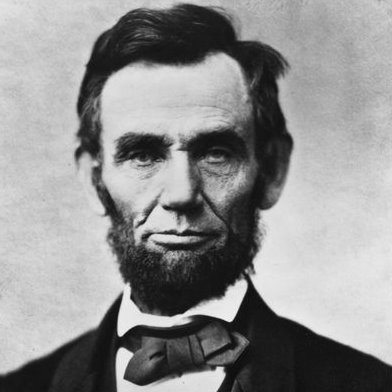
Civics 101 With Professor Lincoln

By John Mark Reynolds
Scriptorium Daily

God has opinions about human affairs, but His opinions are not easy for any human to see.

Abraham Lincoln faced the Civil War, the greatest test the American Republic has endured, but he was not foolish enough to assume the government was on God’s side. In his Second Inaugural Address Lincoln pointed out that both sides asked God’s help and, “The prayers of both could not be answered; that of neither has been answered fully.”

Why?

“The Almighty has His own purposes.”

Lincoln did not hesitate in judging the institution of slavery: it was immoral. He knew that rebellion and disunion, corrupted by a peculiar connection to slavery, was intolerable, but he also knew that the Union was not guiltless. The Constitution had tolerated slavery and the Union had profited from the unpaid work of slaves forced from them by the lash of the masters.

The factories that churned out the Northern arms were not models of equality or justice.

Saying that God Almighty was not “on the side” of the Union is just American Civics 101. Lincoln taught Americans that we must invoke God’s aid, but do so with humility. We can fight for justice, but with charity toward all. Our cause may be righteous, but we are not.

Lincoln accepted that the City of God and the City of Man never fully overlap. Subjects of King Jesus are always in tension with the demands of being a citizen of the Republic. This is not God’s nation (though it is His country), but this side of Paradise I am a member of the American commonwealth. When the judgment comes and all tribes and nations stand before the Almighty, I will stand with shame and pride before His throne as an American.

Practically speaking, this will matter in my vote for President of the United States. I am confident of the righteousness of the pro-life cause and of the morality of traditional marriage. My cause is just, but those are not the only issues that will be decided in the next great election.

And no party, certainly not the Republican Party, is righteous, because I am in it and I am not righteous. I stand before God imperfect and His judgments, with eternity in mind, are inscrutable. Many a slave owner was just in some area of his life not related to slavery; many a pro-choicer may be more loving than I in many ways not related to abortion.

Otherwise just men end up in unjust causes.

So I must press on with humility to do right as God gives me to see the right. For most of us, the realization that there are righteous causes, such as conservation, but no simple “bad guys” to oppose leads to impotence. Lincoln had no malice and great charity, but ran the largest armed force on the planet to do justice.

He was willing to act with determination, but not with ego. As a result, Lincoln was no tyrant and the bad he did, such as suspending some civil liberties, died with him, but his righteous causes, Union and liberty, lived to inspire other great men and women.

Let’s vote and disagree with this in mind. Our foes are wrong, but they are not Satan’s minions. We are not angels of God, but merely people sullying the flag by our raising it. “With malice toward none; with charity for all; with firmness in the right, as God gives us to see the right, let us strive to finish the work we are in . . . “

Friday, November 11, 2011

The Right Way to Be Wrong

By John Mark Reynolds
Scriptorium Daily

Being wrong need not be bad.

Of course, nobody wishes to be wrong, but sometimes it is good for us. Sometimes when I am wrong about a fact or make a mistake in work, I take it as a moral failing when it is not. Assuming normal care and reasonable precautions, there is no sin in being mistaken.

We should embrace our errors of this sort, because they often teach us more than an accidental correctness. I poured hours into a chapter of my dissertation only to have my wise advisor cross it all out. She wrote only one short comment, but that comment summarized my error.

I was tempted to despair. All that work wasted.

But it had not been wasted, because when the error was revealed my mind was freed from error and able to soar a bit higher than it did before. Even the process of developing the wrong idea had helped me, because the labor was not wasted. My mental capacity and knowledge of the text I was studying increased.

I did not learn from this to embrace error, but to accept it. Error must come, but woe to the one who clings to it. Being wrong requires no forgiveness; stubborn love of my error is unforgiveable.

Many of us think a critique is personal, because sometimes it is. “Take this in the spirit in which it is intended,” has generally meant somebody was going to make me feel badly about myself. These critics also take our mistakes personally and so attack what they should gently correct.

I had a math teacher once who would glare at me over a red marked page as if I personally had insulted her by doing my best and doing poorly. “How dare you give me this?” she would towering over me in her zebra pantsuit.

I never knew what to say. My mathematical ineptitude only grew worse as I tried harder and the notion that I would have dared to insult my powerful teacher was ludicrous.

Hard enough to learn from error, but it is nearly impossible if error is used as weapon in hateful hands. Yet even a kind mentor finds it hard to communicate error well to a traumatized generation. The temptation is ether to ignore mistakes and focus only on the good or to despair of education altogether.

Self-esteem is fragile, because it is too often based on false praise and collapses under the weight of the tiniest just criticism. The weighty reality of error crushes the papier-mâché of false praise. The giant “most improved trophy” on the mantel cannot compensate for the realization, even kindly expressed, that the student actually cannot play the game well.

So I am praying for the mercy to accept my errors and be able to learn from them. I should not exactly love making mistakes, but not be worried about them either. If that is the judgment I must use on myself, then it is the standard I must use on others.

When a neighbor, or even an enemy, makes a mistake, I will not use it as an occasion to mock or denigrate, but as a chance to teach. God help me never to take honest errors personally.

Wednesday, October 12, 2011

What’s a Good Question?


By Fred Sanders
Scriptorium Daily

In his visionary book Finding Common Ground, Tim Downs noted that “because Christians tend to be answer people, we’re not especially skilled at asking good questions; questions that aren’t simplistic, leading, or downright insulting.” Ouch.

In Biola’s Torrey Honors Institute, we’re answer people, but we teach socratically. That means our primary job as teachers is to ask questions, and they need to be good ones. What’s a good question? That’s a good question.

A good question evokes curiosity by exhibiting curiosity.

A socratic teacher can’t hover above the discussion, occasionally hurling a thunderbolt of insight down toward the benighted students from the Olympian heights of clear understanding. A socratic teacher has to get down in the perplexities with the students, and find the way out using the same resources available to them.

When preparing for one of our 3-hour class sessions, a socratic teacher can script about half of the major questions in advance. By reading the text with students in mind, the tutor can generate a dozen major questions and some supporting questions under each of those. But once class begins, the dialectic takes unpredicted turns, leading out beyond the foreseen questions. Then the tutor has to set aside the scripted questions, and develop the skill of creating new questions on the spot.

A good question, in this sense, will be specifically tailored to the new situation. Here are some dichotomies to help in crafting questions.

Low level questions only require students to repeat information, perhaps to rephrase it. But High level questions require analysis, synthesis, and evaluation of the information (I’m using “low” and “high” loosely, but see Bloom’s Taxonomy of Cognitive Objectives for a widespread definition).

Information retrieval questions get short, factual answers (“Who is Athena’s mother?”). Information evaluation questions presuppose information retrieval, and usually get the short, factual answer thrown in as the student hurries on to the evaluative task (“Is Athena like her mother?”). Info-retrieval questions are usually best used in a series that are leading somewhere.

Convergent questions imply one right answer (“What is the main idea of this book?”); Divergent questions suggest a range of possibilities (“What are some of the most important things in this book?”).

Unstructured questions do not indicate what form the answer should take (“What did you think of Paradise Lost?”); Structured questions dictate the right form of response (“What is a new idea you got from Milton?” “What makes you mad in Paradise Lost?”)

Multiple questions offer many questions at once, so the real question is “Which of my questions do you want to use?” (“Why does God choose certain people for his purposes?Was he not dealing with individuals before Genesis 11? What’s special about Abraham?Does the text say why Abraham was chosen by God?”) Singular questions present a sheer cliff by comparison (“Why did God choose Abraham?”). Singular questions usually produce some silence from students. Multiple questions are a way for the tutor to fill up gaps in the conversation, to seed the clouds, and to check several prospects at once.

Expected questions are smooth (“Do the Federalist Papers throw any light on the U.S. Constitution?”); Unexpected questions either approach the subject from a surprising angle, or play against student presuppositions (“Would the Federalists be in favor of dividing California into three separate states?”). Struggling with glib students and rapid answers? Deploy a few dramatically unexpected questions.

Some questions focus on how the text itself presents ideas (“Why does Bunyan compare the Christian life to a long journey with battles along the way?”); others look away from what the text presents by exploring terms and categories the author did not present (“Why didn’t Bunyan make this a sea journey, with pirates? Why didn’t he make it a cooking contest? Why didn’t he make his characters talking animals?”). When you use the second kind of question, make sure you’re serving the author and not changing the subject or becoming impressed with your own, supposedly superior, ideas.

Close-ended questions require one short answer, usually yes or no (“Had you ever read this book before today?”). Open-ended questions require a complex answer (“How many times have you read this book before today?”)

An obvious definition question seeks categorization (“What is an epic?”); a concealed definition question presupposes that, but puts it off by one step (“Is this an epic?”).

Some questions clarify by focusing on the intention of the student who has just spoken (“Do you mean that having faith is a kind of work?”); others clarify by focusing on the text (“Does Luther think that having faith is kind of work?”)

Some questions offer an invitation to synthesis (“How can mercy and justice be reconciled?”); others force a dichotomy (“Would you rather receive merciless justice or unjust mercy?”)

Some questions put the tutor in focus, requiring students to volley back to the authority figure (“Why am I asking about revenge, if Shakespeare doesn’t use that word?”); other questions encourage students to bat the discussion back and forth with each other (“Miss A, you seem to disagree with Mr. B.”)

Some questions are really an exercise in reflective listening in question form, showing that you are actively listening right now (“Do I hear you saying that Solomon was in fact one of the most foolish of men?.”)

Some questions are phrased in a way that aggressively moves the class over one issue and hurries them on to the next issue. These show that you have already heard (in the past tense) and are ready for the next step (“Yes, having hundreds of wives is not exactly wise. But what I want to know is, which of Solomon’s actions show him to be exercising the wisdom we know he was given?”).

Many of the best questions are so context-specific that they will emerge directly from close observation of the text or the conversation. Sometimes the tutor should simply ask how one sentence relates to the preceding one, or how a certain set of words is different from the diction used elsewhere in the same work (“Why are all these court-room terms being used on this page? Why is the vocabulary of a legal proceeding suddenly so prominent?”). Other times a quick internal summary of how the conversation got to this point will suggest an incisive question (“Then we asked about deceitfulness, and you said the king was a master rhetorician, and we started talking about the abuse of power. Was that a logical chain of thought, or free association?”).

Finally, if you get into enough long, involved conversations, you’re bound to reach a point where you’re out of ideas and the good questions aren’t coming to you fast enough, or when a student says something that you just can’t get your mind around. Instead of saying “huh” or “what in the world do you mean?”, do one of the following four things:

*Inquire into the assumptions behind what is being said
*Examine the reasons given, whatever they are
*Require evidence to be offered
*Ask about implications

Socratic teachers all experience those moments when they lose their bearings and can’t figure out how to get to the next major topic, or even what that topic is. While you’re waiting for the big idea to occur to you, or in an absolute emergency of mind-not-working-good-hood, you should memorize the following sets of syllables and say some of them out loud instead of saying “duh.”

Why do you say that?
How does what you’re saying relate to what we’ve said so far in this class?
X, what do you think Y is saying?
What is another example of what you’re saying?
If that is the answer, what was the question?
What is it that convinces you this is true?
What would it take to make you change your mind about this?
Can you explain what makes you think this?

None of those are great questions. But in the right place and time, they can be good questions.